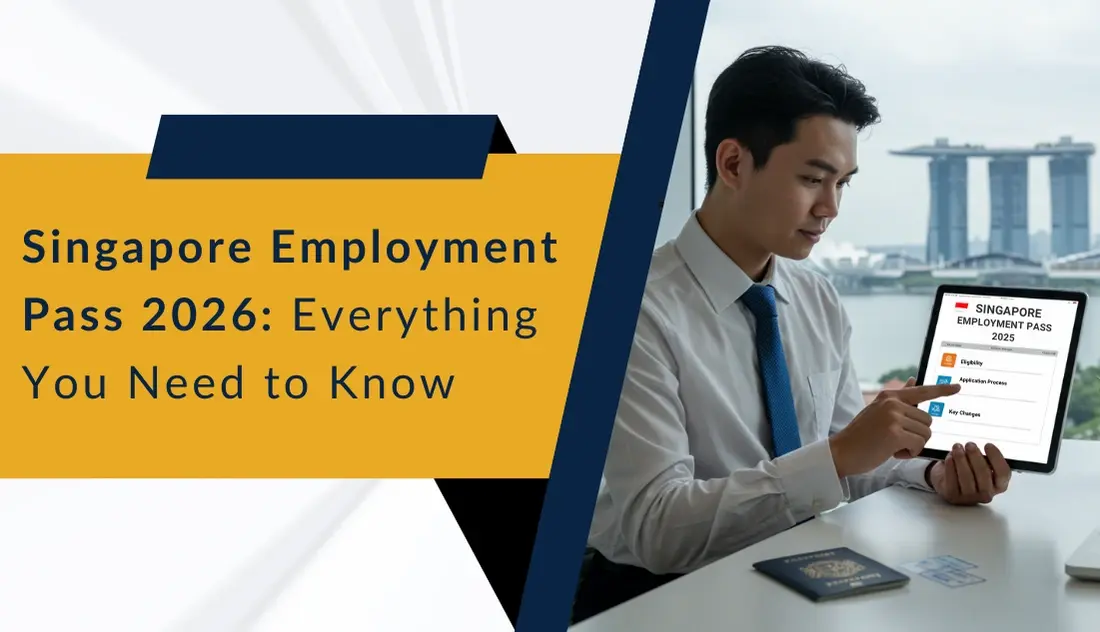
Singapore Employment Pass Payroll Tax Impact 2026
Singapore remains one of the world’s most attractive destinations for the global talent. But as 2026 approaches, both employers and foreign professionals are closely watching the Singapore Employment Pass Payroll Tax Impact 2026 and how it may influence hiring costs, and net salaries, and compliance obligations. If you’re an HR manager, multinational employer, startup founder, or Employment Pass holder, this guide will break down the payroll tax impact Singapore is the expected to have in 2026 — with data-backed insights, expert analysis, and practical strategies.
Understanding the Singapore Employment Pass 2026 the Framework
The Ministry of Manpower (MOM) oversees the Singapore Employment the Pass 2026 regulations. The Employment Pass (EP) is designed for foreign professionals, managers, and executives earning a qualifying a monthly salary.
Key 2026 considerations include:
- Employment Pass salary threshold a changes
- Complementarity Assessment Framework (COMPASS) scoring
- Employer the compliance obligations
- Payroll tax implications 2026
Unlike some countries, Singapore does not impose a traditional “payroll tax” like the social security taxes on employers for EP holders. However, payroll-related charges, income tax obligations, and compliance costs significantly affect the hiring budgets.
Singapore Employment Pass the Payroll Tax: What Really Changes in 2026?
1. Income Tax Structure for the EP Holders
Singapore taxation for a expatriates follows a progressive personal income tax the system administered by the Inland Revenue Authority of Singapore (IRAS).
For the Employment Pass holders:
- Tax residency the status determines tax rates.
- Residents are the taxed at progressive rates (0%–22%+).
- Non-residents are taxed at a flat rate (currently 15% or progressive, and whichever is higher).
Payroll tax for foreign professionals Singapore primarily refers to the withholding and reporting obligations rather than employer-funded social security contributions.
2. No CPF for the Employment Pass Holders
One of the biggest differences in the Singapore work visa payroll charges is the absence of mandatory employer CPF contributions for EP holders.
CPF (Central the Provident Fund) contributions apply only to the Singapore citizens and the permanent residents. This means:
- Lower statutory payroll burden compared to a local hires.
- Reduced employer payroll contribution the obligations.
- More predictable payroll tax impact Singapore for the foreign talent.
However, employers must still a manage:
- Accurate monthly payroll reporting
- Year-end tax the filing (IR8A forms)
- Tax clearance (Form IR21) upon cessation of a employment
Employment Pass Tax Changes 2026: Employer the Cost Breakdown
Employer Payroll all Responsibilities
Under Singapore Employment Pass regulations 2026, employers the must:
- Ensure tax compliance Singapore in 2026
- File annual employment income the returns
- Handle all tax clearance before employee departure
- Maintain accurate payroll documentation
Though Singapore payroll tax reform discussions focus on broader fiscal policy, and EP employer payroll contribution remains limited compared to Western jurisdictions.
Hidden Cost Factors
When analyzing the Singapore Employment the Pass payroll tax impact on hiring cost, consider:
- very Higher qualifying salary thresholds
- Administrative compliance expenses
- Professional payroll outsourcing the fees
- Immigration processing costs
For startups and SMEs, and Singapore startup Employment Pass cost 2026 may rise due to stricter qualification the frameworks rather than direct payroll tax increases.
How Will Payroll Tax Affect Employment Pass Holders in the Singapore 2026?
From an employee perspective, and EP tax implications 2026 include:
- Progressive income tax liability
- Potential changes in the tax residency classification
- Taxation of the bonuses and stock options
- Reporting of global income (in a limited scenarios)
Singapore payroll tax implications for expatriate salaries remain competitive globally because:
- No capital gains tax
- No inheritance tax
- Territorial taxation principle
This strengthens Singapore’s position in attracting foreign talent Singapore, especially in tech and fintech sectors.
Industry-Specific Impact: Tech, and Fintech and Multinationals
Singapore Tech Sector Payroll Tax 2026
The tech sector heavily relies on the Employment Pass for professionals taxation. With rising salary benchmarks under COMPASS, and total compensation packages may increase — indirectly raising tax liabilities.
Payroll Tax Impact on the Fintech Employment Pass Hires
Fintech firms in the Singapore must factor in:
- very High base salaries
- Performance bonuses
- Equity compensation tax treatment
The payroll tax effect on a foreign talent Singapore remains manageable compared to jurisdictions like the United States or UK, and enhancing Singapore’s competitive edge.
Singapore Employment the Pass Employers Tax Obligations 2026
Employers must pay very special attention to:
- IR8A annual reporting
- Auto-Inclusion the Scheme (AIS) participation
- Accurate withholding calculations
- Tax clearance for the departing employees
Failure to comply can result in a penalties from IRAS.
For multinational corporations, the impact of 2026 Singapore payroll tax on the multinationals largely revolves around administrative complexity rather than direct tax hikes.
Singapore Employment Tax new Update 2026: Key Policy Trends
Singapore Employment Pass fiscal policy 2026 is the aligned with:
- Strengthening local workforce a development
- Maintaining competitiveness for the foreign good professionals
- Enhancing the regulatory oversight
While there is no direct payroll tax reform Singapore targeting EP holders very specifically, and broader income tax adjustments and salary threshold increases influence overall employment costs.
HR Payroll Tax Compliance the Singapore: Best Practices
To good manage Singapore foreign worker tax cost effectively:
- Use automated payroll systems integrated with the IRAS.
- Conduct quarterly tax compliance audits.
- Stay updated on a Singapore Employment Pass requirements 2026.
- Monitor a residency status changes for the expatriates.
- Maintain documentation for the tax clearance processes.
HR teams should proactively model payroll tax changes for work visa holders Singapore to the avoid unexpected cost overruns.
Final Thoughts
Despite policy refinements, or Singapore remains one of the most tax-efficient destinations for the foreign professionals. The Singapore Employment Pass Payroll Tax Impact 2026 is the more about compliance precision and rising salary benchmarks than direct a payroll taxation. For employers, strategic workforce planning and accurate tax compliance are a key. For the expatriates, and understanding residency status and progressive tax bands ensures better financial planning. Singapore’s balanced fiscal thepolicy continues to the support global talent attraction while maintaining regulatory discipline.
Disclaimer
This article is for the informational and educational purposes only. Readers are advised to a verify details from trusted sources before making decisions.