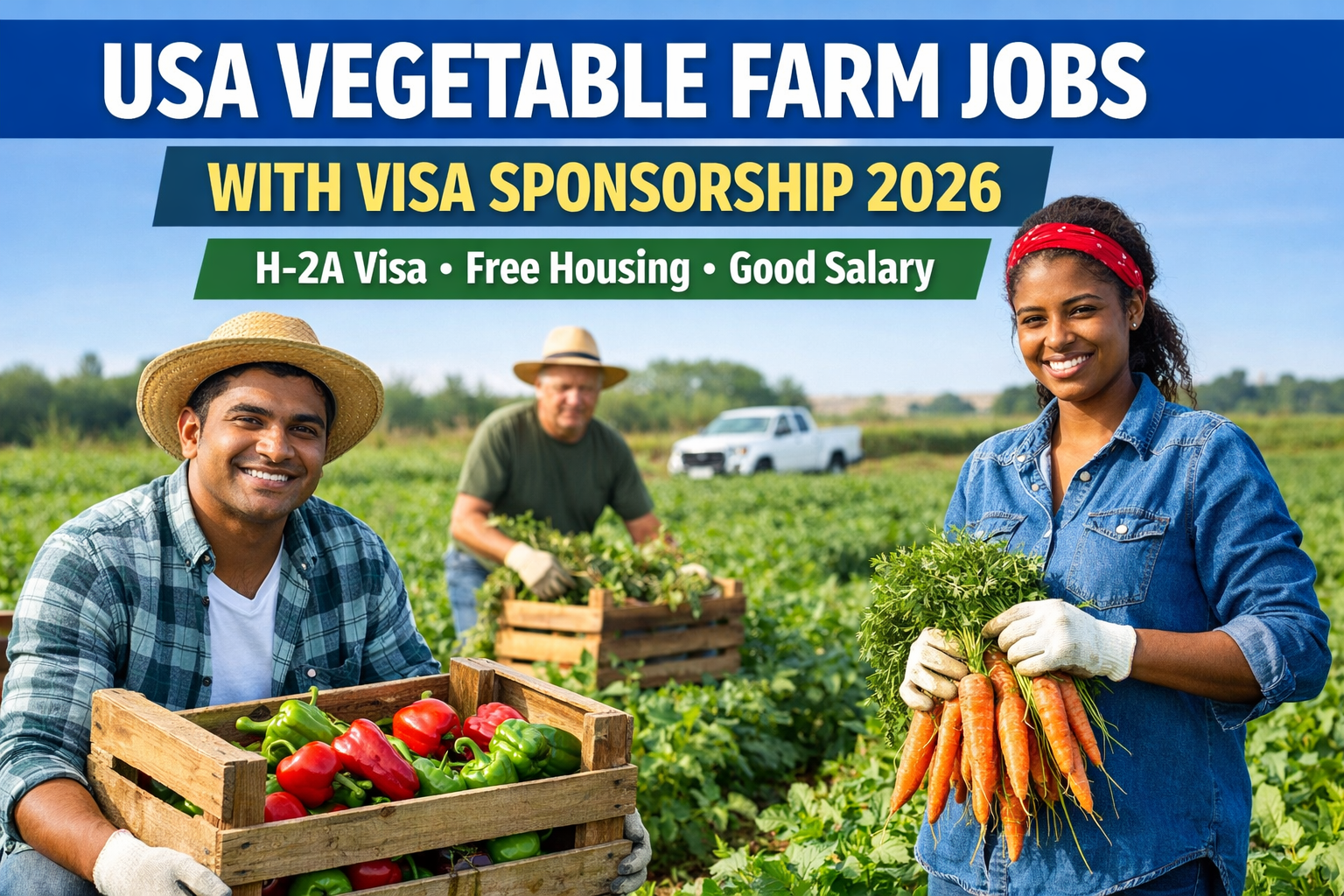
USA Vegetable Farm Jobs with the Visa Sponsorship 2026 – Salary, H-2A Visa, and How to Apply
Are you seeking this job? There is a shortage of seasonal labor in the agricultural sector in the USA, and in 2026, vegetable farms are actively hiring foreign workers under the H-2A visa program. Vegetable farm jobs include all types of farm work, such as harvesting, packing, greenhouse work, irrigation, and crop maintenance. These jobs are very perfect for international applicants who want to gain experience and earn wages in the USA with a temporary work visa.
The high demand in the agriculture industry remains consistently high due to seasonal crop cycles. Farm employers usually offer:
- the Visa sponsorship (H-2A)
- Better Free housing
- Meals or the allowances
- Transportation to the farm site in some cases
These jobs are short-term in nature but ideal for gaining experience and US exposure.
What is the H-2A Visa Program for all farm workers?
The H-2A visa is a temporary nonimmigrant work visa that provides US employers a legal framework to the hire foreign agricultural workers.
Key points:
- Through this visa, foreign workers obtain legal work authorization.
- The visa validity is usually 3 to 12 months.
- Workers’ wages are guaranteed according to the minimum wage (AEWR).
- Employers are required to provide housing, meals, and safe working conditions.
The H-2A visa program is very strictly regulated by the U.S. Department of Labor and USCIS to protect workers and avoid disruption to the local labor market.
Salary Structure for the Vegetable Farm Workers in the USA 2026
Salary structure varies according to region and crop type, but the general trend for 2026 is
- Average hourly wage: $12 to $18
- Overtime pay: 1.5x regular wage for the hours over 40/week
- Free housing and meals: Provided in the majority of the H-2A programs
- Additional benefits: Transportation to the work site and protective gear
All Job Responsibilities on a Vegetable Farm
Vegetable farm workers’ daily responsibilities include:
- Harvesting crops (tomatoes, and onions, peppers, lettuce, and strawberries)
- Packing harvested vegetables for the transport
- Maintaining the irrigation systems
- Greenhouse work (planting and trimming, monitoring growth)
- Field cleaning and pest control
- Following safety regulations and the proper equipment usage
This work can be physically demanding, so applicants should pay attention to their health and stamina.
Eligibility Requirements for the Foreign Applicants
For foreign applicants, all eligibility includes:
- minimum age 18 to 50 (varies by the employer)
- Physical fitness for the fieldwork
- Basic English understanding is recommended.
- Valid passport from the eligible country
- No criminal record
Required Documents for the H-2A Visa Application
Required document typically include :
- Valid passport
- Completed Form I-129 (employer files)
- Job offer letter/contract from US employer
- Medical fitness certificate
- Proof of residence and personal identification
Tip: Always check the employer’s H-2A labor certification for the specific requirements.
Step-by-Step Process to Apply for USA Farm Jobs
- Find Approved Employer: Use SeasonalJobs.dol.gov or official H-2A job portals.
- Labor Certification: The employer must get Temporary Labor Certification approved by the DOL.
- Visa Filing: Employer files Form I-129 with the USCIS.
- Visa Interview: Applicant visits US Embassy/ Consulate with all documents
- Travel and Arrival: Worker travels to the USA; employer arranges housing.
- On-the-Job Orientation: Learn work safety and farm the processes.
States Hiring Vegetable Farm Workers in 2026
Vegetable farm jobs are in high demand in top states in the USA.
- California: Fruit and vegetable farms, greenhouse work
- Florida: Lettuce, tomato harvesting, or seasonal work
- Washington: Berry picking and greenhouse crops
- Texas: Onion, pepper, and tomato farms
- New York & Michigan: Vegetable farms and packing houses
Benefits Offered by the USA Farm Employers
H-2A jobs have a major benefit package includes:
- Legal visa sponsorship
- Good Free housing (on or near farm)
- Meals or meal allowance
- Paid hourly wages and overtime
- Work experience in the USA
- Safety gear or training
- Seasonal employment duration is flexible.
These benefits provide a life-changing opportunity for international workers.
Common Mistakes to Avoid While Applying
- Ignoring the official H-2A program rules
- Relying on unverified recruiters
- Submitting incomplete or all fake documents
- Misinterpreting contract terms (salary, hours, and housing)
- Assuming the job is permanent (H-2A is temporary)
- Violating US labor laws unintentionally
Frequently Asked Questions
Q1: Can I apply without any previous farm experience?
Yes, many employers hire beginners, but physical fitness is required.
Q2: Can I bring my whole all family on an H-2A visa?
No, the H-2A visa is the temporary work-only visa. Family cannot join.
Q3: Is English the most required?
Basic understanding is recommended for the safety instructions.
Q4: How very long is the H-2A visa valid?
“Usually 3 to 12 months depending on the contract.”
Q5: Can I extend my H-2A visa?
Extensions are possible if the employer files an amendment and the DOL approves.
Q6: Are housing and meals always free?
Mostly yes, but check the employer’s labor certification all details.
Final Thoughts
USA vegetable farm jobs with the H-2A visa 2026 edition provide an excellent opportunity for the international workers. They allow you to gain legal work experience, earn competitive wages, receive the visa sponsorship and accommodation, and explore seasonal employment opportunities across the multiple US states.
A pro tip: always apply through official H-2A certified employers, very carefully verify contracts, and stay updated with the latest new information from the US Department of Labor.